Table of Contents
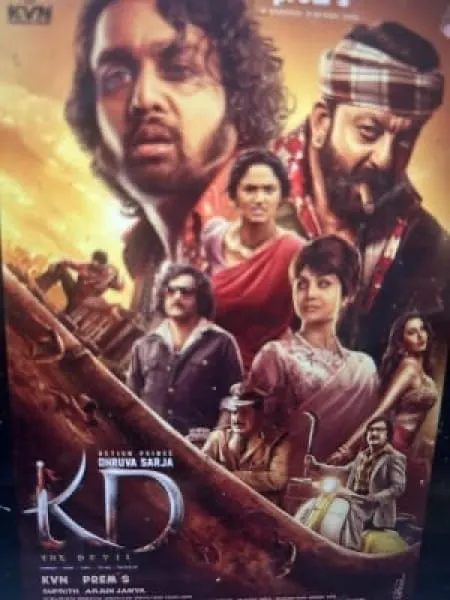
KD, The Devil is a multi-language production scripted and directed by Prem, best known for his emotional gangster drama Jogi.
*****Testing testing testing. This is just a trial story. The site will be up and running soon.*****
The most talked-about moment in the run-up to KD: The Devil wasn’t a teaser drop or a casting coup—it was a song that vanished almost as quickly as it arrived.
The Kannada film, made in Kannada and planned as a pan-India release in four other languages,, is now showing in Karnataka.
Titled “Sarse Ninna Seraga Sarse” in Kannada and released in Hindi as “Sarke Chunar Teri Sarke,” the track was meant to be a flashy, pan-India dance number featuring Nora Fatehi and Sanjay Dutt. Instead, it triggered a storm that forced the filmmakers into an unusually swift retreat. Within days of its release, the song was pulled down from YouTube and other platforms following intense backlash, legal complaints, and even institutional scrutiny.
What went wrong? The outrage centred on the song’s lyrics and visual treatment, widely criticised as vulgar and regressive. Viewers across languages—Kannada and Hindi alike—objected to what they saw as gratuitous sexualisation packaged as nostalgia. Social media reactions escalated quickly, but this wasn’t just online noise. Formal complaints were filed, and the issue reached authorities, including the National Human Rights Commission, turning a promotional song into a matter of public debate.
The speed of the backlash revealed something deeper about contemporary Indian cinema. In an era where films aim for “pan-India” appeal, songs often become linguistic hybrids—shot in one language, dubbed in another, and marketed everywhere. But that scale also magnifies scrutiny. What might once have passed as a routine “item number” now faces a far more alert and vocal audience, unwilling to accept dated tropes without pushback.
The filmmakers, led by director Prem, found themselves navigating a tricky line between creative expression and public accountability. While some defended the track as part of a stylised, retro aesthetic, critics argued that invoking the past cannot excuse regressive representation. The debate quickly expanded beyond the song itself—raising questions about censorship, digital platform regulation, and who gets to decide what crosses the line.
Interestingly, the controversy also exposed the fragmented nature of film certification in the streaming age. Since the song was released online and not as part of a certified theatrical cut, it initially fell outside the purview of the Central Board of Film Certification—a gap that became glaring once the backlash intensified.
For the actors involved, the fallout was equally complex. Nora Fatehi later stated she was unaware of the meaning of the lyrics while filming in Kannada, highlighting the often compartmentalised nature of large productions. That claim, whether persuasive or not, added another layer to the conversation: the distance between performance and authorship in modern cinema.
In the end, the song’s removal did not just resolve a controversy—it became the story. For KD: The Devil, the withdrawn track now lingers like a ghost in its promotional campaign, a reminder that audiences today are not passive consumers of spectacle. They are active participants, willing to challenge, reject, and even rewrite the narrative around a film before it hits the screen.
And in that sense, the silence left by the missing song speaks louder than the music ever did.