Table of Contents
An annual event dedicated to Marathi and Kannada bhakti music is entering its 21st year in 2026.
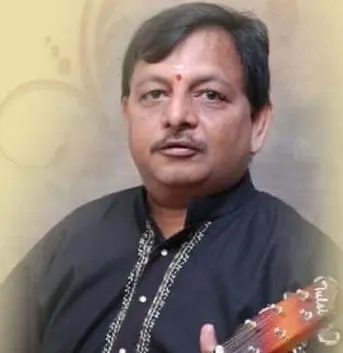
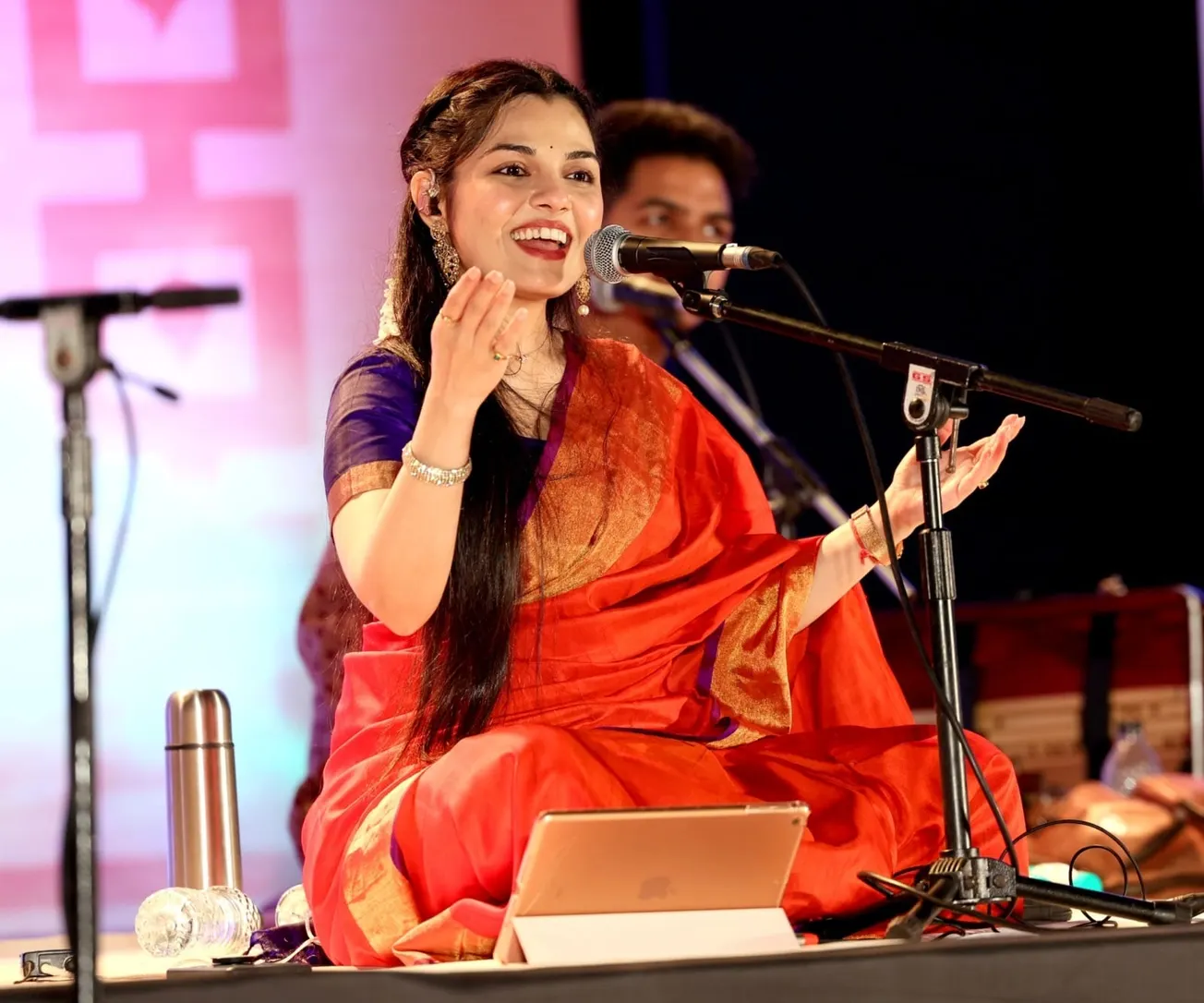
Called Bolava Vitthal, it features vocalists Jayateerth Mevundi and Aarya Ambekar this year.
What began as a simple idea in Mumbai in 2005 has, since arriving in Bengaluru in 2010, grown into an annual pilgrimage for music lovers across languages and communities. This year, it is going to seven cities all through July and the first week of August.
The idea was simple. Shashi Vyas, founder and director of Pancham Nishad Creatives, wanted to take abhangs beyond traditional temple spaces.
The inspiration came from the renowned vocalist Kishori Amonkar. Some 10 years ago, Vyas visited her and reminded her that she hadn’t performed abhangs in a while. She then agreed to do a concert.
Shashi then felt her concert title Tochi Naadu Suswaru — “Let us give musical expression to Vitthal’s praises” — was too esoteric. Together they arranged a concert called Bolava Vitthal, named after a beloved abhang by Sant Tukaram that Amonkar had set to music. After a year’s break, Vyas revived the concert idea with younger singers.
When it moved to Bengaluru five years later, it was received with great enthusiasm.
"Choosing Bengaluru felt so right because the devotion to the deity Vitthal is already so deeply rooted here, both in Maharashtra and Karnataka," says Vyas.
That connection is not accidental. Maharashtra and Karnataka share a border, but more importantly, they share a deity and a devotional language.
Maharashtra’s Varkari movement gave the world the poetry of Sant Dnyaneshwar, Sant Tukaram, Sant Namdev, Sant Janabai, Sant Chokhamela, and Sant Eknath. Walking hundreds of miles to Pandharpur, Varkaris sing abhangs all the way.
In Karnataka, the Haridasa tradition carried the same spirit through a different lineage. Led by Saint Purandara Dasa, the Haridasas composed dasara padas — devotional songs in Kannada that emphasised surrender, morality, and direct love for Vitthal (Krishna). Dasara padas are also called devaranamas.
Bolava Vitthal consciously bridges two literary and music traditions. On one stage you hear Marathi abhangs and Kannada Dasara padas, different languages but the same longing. Over 16 years, that programming choice has turned the concert into a cultural crossroads, drawing audiences who may not know Marathi or Kannada but recognise the emotion instantly.
For 2026, the curation brings together two distinct voices.
Jayateerth Mevundi, known for his depth in Hindustani classical and bhakti music, approaches the abhang as offering, not performance.
"The stage really turns into a sacred space where the music and bhakti become one. For a singer, the greatest joy is that moment of purity when the audience completely connects with the saint's words,” he says.
Aarya Ambekar, a young voice rooted in both classical training and Marathi musical theatre, speaks to the generational bridge the songs create.
"The poetry of the saints is incredibly simple, but it carries such a deep sense of love and complete surrender. Every single time I perform them on stage, I feel like I'm tapping into something timeless," she says.
They will be supported by an ensemble that reflects the confluence: Prasad Padhye on tabla, Sukhad Munde on pakhawaj, Aditya Oke on harmonium, Sunil Kumar on flute, and Apurv Dravid on additional rhythms.
Part of the appeal is in the language. The saints wrote in the language of the common person. Tukaram’s frustration, Janabai’s domestic devotion, Purandara Dasa’s ethical clarity — they bypass doctrine and go straight to the heart. As Ambekar notes, "it still beautifully connects with people today."
Pancham Nishad, founded in 1996, has spent three decades moving classical and devotional forms from intimate baithaks to large public stages.
Event details
Bolava Vitthal – An evening of Abhangs and Dasara Padas
Date: Friday, 17 July 2026
Time: 6:30 p.m. (Seating by 6 pm.)
Venue: Chowdaiah Memorial Hall, Bengaluru
Tickets: http://www.bookmyshow.com
Queries: WhatsApp only – +91 70455 97505
Interview with
Shashi Vyas, founder and director of Pancham Nishad Creatives.
Are you planning to take Bolava Vitthal to other cities?
Yes. Over the years, it has travelled extensively to cities across India, and this year we are presenting it in seven cities. The 2026 tour began on June 13 in Ahmedabad, followed by Goa on July 4. It will continue to Bengaluru on 17 July 17, Jabalpur on July 18, Indore on July 19, Mumbai on July 25 and Pune on July 31, before culminating in Mangaluru on August 2.
What are the challenges of organising an annual event such as this one?
This is the 21st year of *Bolava Vitthal*. Over the past two decades, our biggest challenge has been to create greater awareness about the extraordinary literary, philosophical and spiritual legacy of India's saint-poets. While the abhangs of Sant Dnyaneshwar, Sant Tukaram, Sant Namdev, SantChokhamela, Sant Janabai, Sant Bahinabai and Sant Sakhuare deeply rooted in Maharashtra, and the compositions of saints such as Purandara Dasa, Kanaka Dasa and JagannathaDasa are an integral part of Karnataka's cultural heritage, these traditions were relatively unknown in many parts of North and East India. Through Bolava Vitthal, we have consciously taken this music to cities such as Delhi, Varanasi, Kolkata, Jaipur, Indore, Ujjain and many others. Today, we have presented it in more than 35 cities across India, and we remain committed to taking this rich devotional tradition to even wider audiences.
How do you plan to popularise Haridasa compositions?
From the very beginning, Bolava Vitthal has celebrated the shared bhakti traditions of Maharashtra and Karnataka. Along with Marathi abhangs, our concerts also feature Haridasa compositions, especially those of Saint Purandara Dasa, Saint Kanaka Dasa and Saint Jagannathan Dasa, presented by both Kannada and Marathi vocalists. This musical dialogue between the two traditions is one of the defining features of Bolava Vitthal.
Which artistes do you plan to present in the years to come?
India has an extraordinary pool of talented young musicians. We look forward to presenting deserving artistes such as Siddhartha Belmannu and Aniruddha Aithal from Karnataka, and Rajyog Dhuri, Sharayu Date and KetakiMategaonkar from Maharashtra. One of Pancham Nishad'senduring objectives has always been to provide a national platform to outstanding young artistes who are deeply committed to this musical tradition.
Do you plan to release the concerts as audio and video recordings?
We have no immediate plans to release the concerts as commercial audio or video recordings. However, we are meticulously archiving and documenting every edition of Bolava Vitthal for posterity. While these recordings have immense archival value, we believe this music is best experienced in a live concert, where audiences can truly absorb its spiritual energy, emotional depth and collective devotion. We especially want the younger generation to experience this rich bhakti tradition firsthand. In today's fast-paced and stressful world, such music has the power to bring inner peace, reflection and a deeper connection with our cultural heritage. Music, whether Indian or from any other part of the world, is far more than a source of entertainment. At its highest level, it nurtures our spiritual, cultural and emotional growth and has the power to transform us from within. In today's increasingly stressful world, music is one of the most effective paths to inner peace, mental well-being and a more meaningful life. That is the larger purpose behind Bolava Vitthal and every initiative of Pancham Nishad.
.