Table of Contents
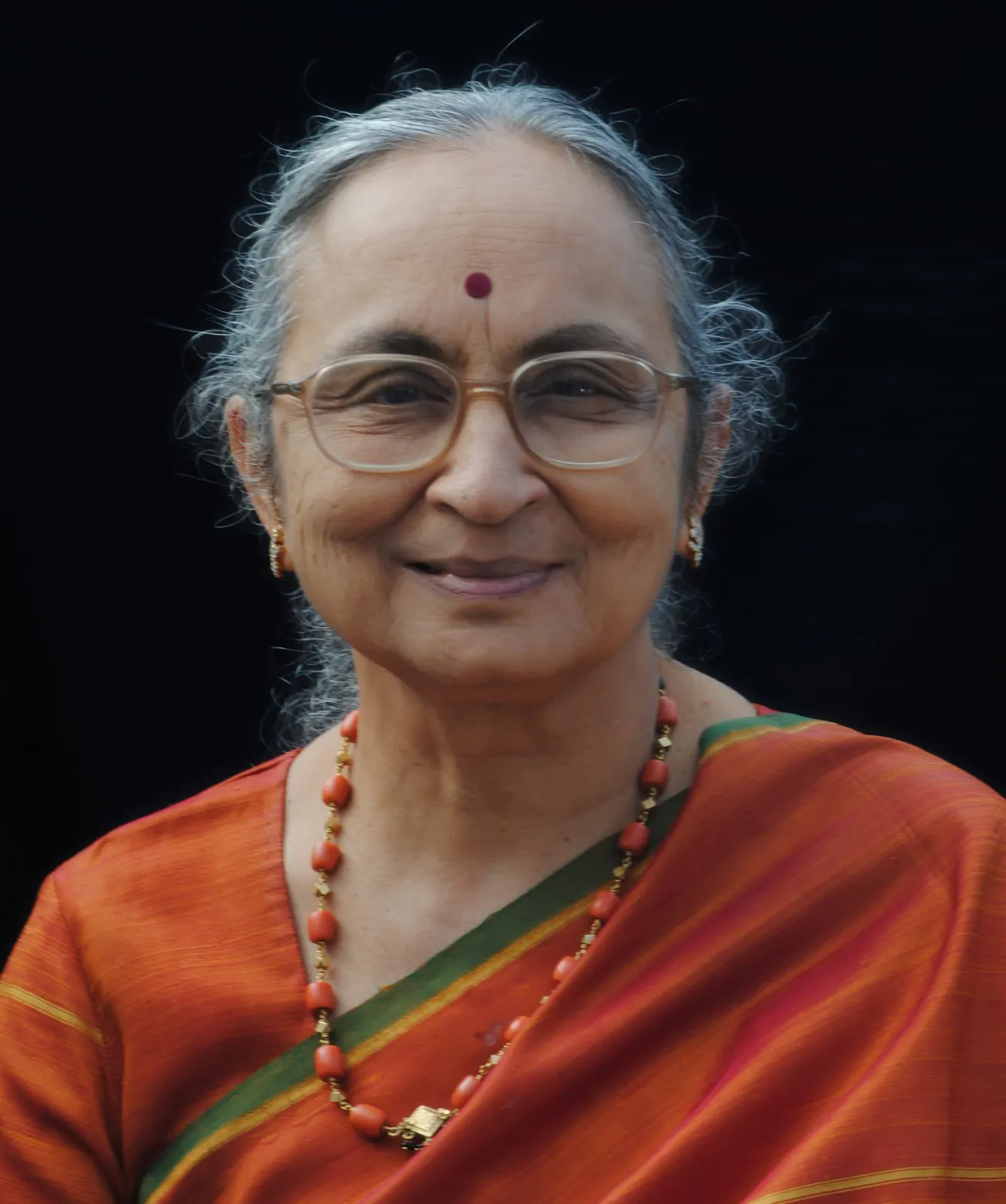
Lalith J Rao, renowned vocalist of the Agra-Atrauli gharana, died in Bengaluru on June 3. She was 83.
Born on 6 November 1942 in Bengaluru, she was formally began learning music came when she was 11. Her tradition traces its lineage to the court of the 16th century Mughal emperor Akbar.
When she was just three, Lalith Rao was taken to an all-night concert of Ustad Faiyaz Khan, and her parents were struck by how attentively she had absorbed his music. They found a teacher for her in Pandit Ramarao Naik, who lived in Bengaluru. He was a direct disciple of Ustad Faiyaz Khan, and initiated her into the Agra gharana’s rigours.
Lalith Rao gave her first public concert at the Bangalore Sangeet Sabha at 12. By 14, she had won a big national prize for classical music in Mumbai.
Lalith Rao was equally good at sports and academics. She completed a ME in electrical communication engineering from the University of New Brunswick. In 1967, she married N Jayavanth Rao, then an executive with Alstom, a French company specialising railway track laying and electrification, and moved to Delhi.
Jayavanth Rao, an ardent music lover, encouraged her to quit engineering and take up music full-time. The couple had moved to Mumbai, and with her husband's support, she resumed her musical journey under the tutelage of Pandit Dinkar Kaikini. She was later mentored by Ustad Khadim Hussain Khan, a torchbearer of the gharana.
Lalith Rao’s singing was meticulous, and did not deviate from classical restraint. A critic said her music “resonates with emotion, refraining from a dry display of virtuosity”.
Her repertoire spanned khayal, thumri, and tappa, and she was especially celebrated for ragas of the Marwa thaat. A widely shared recording of raga Sohini captures her overall approach to singing--rooted in tradition but not pedantic.
Her records were published by Navras Records, London, and Ocora Radio France, and she contributed hundreds of Agra gharana compositions to archives at the University of Washington, Seattle, the ITC Sangeet Research Academy, and the National Centre for the Performing Arts, Mumbai.
Lalit Rao’s led a Ford Foundation archival project for the Sangeet Research Academy, Kolkata, and produced thematic presentations like Bhairav to Bhairavi, Raag-rang Samay Yatra, and Agra gharana-Ek Vatavriksh. These were lecture-demonstrations that mapped the evolution of the gharana.
Lalit Rao received many honours, including the Karnataka Rajyotsava Prashasti and the Sangeet Natak Akademi Award. She was also the recipient of the Karnataka state musician title in 2022, and the Gurumaa Annapurna Devi Award in 2024.
In Bengaluru, where she lived over the last couple of decades, she taught many in the Agra tradition. Many of her disciples are critically acclaimed vocalists who perform regularly.
Jayavanth Rao, her husband =, documented the gharana’s history in his biography of Ustad Khadim Hussain Khan, Sajan Piya.
Lalith Rao was a top-graded artiste of All India Radio and Doordarshan, and is estimated to have given at least 1,000 concerts across India and abroad.
- Sajan tum zara bolo bolo bolo in raga Sohini: One of Lalith J Rao's early recordings