Table of Contents
By SHYAMALA RAO
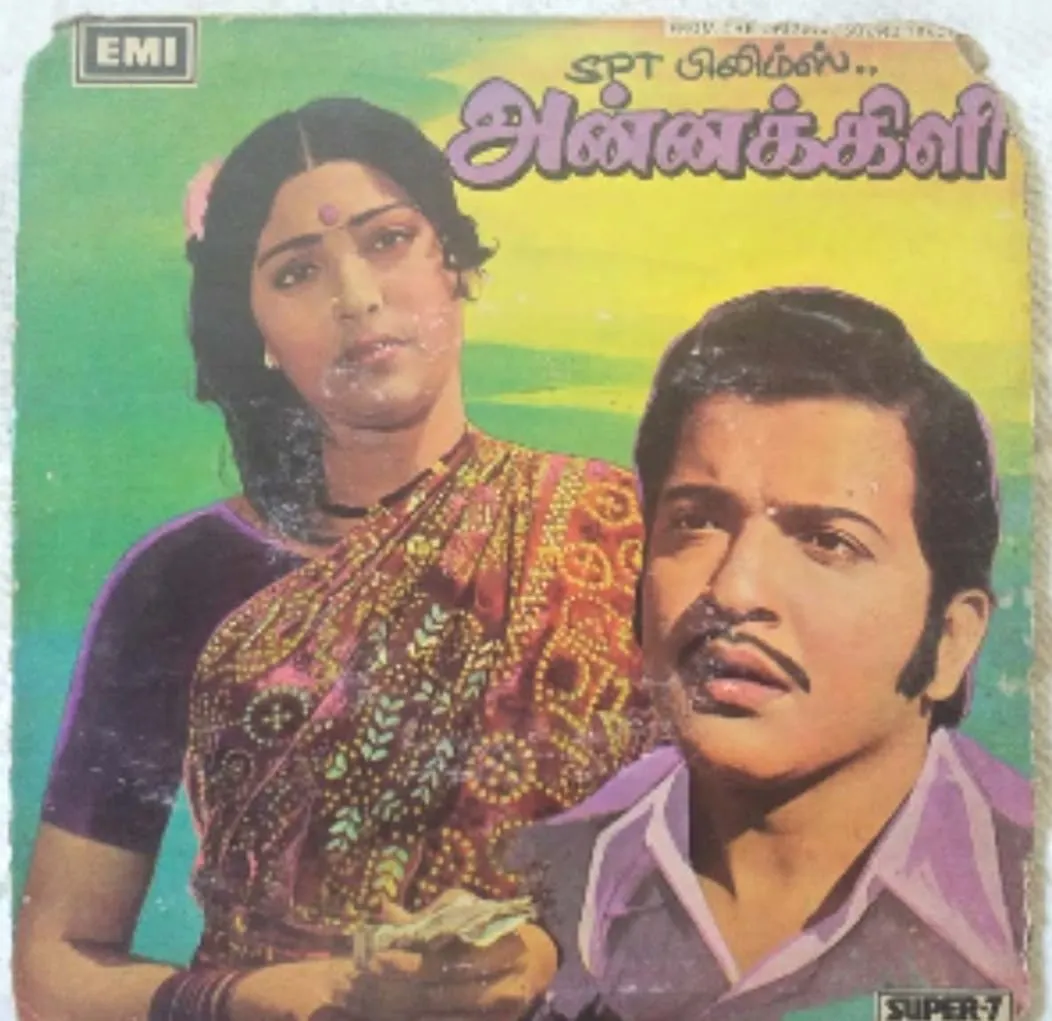
When the film Annakkili announced the arrival of a little-known composer named Ilaiyaraaja, few could have predicted how profoundly he would change film music. In the 50 years since then, much has been said and written about his contribution to Indian cinema, his genius, and his legacy. However, for those of us whose childhoods coincided with the beginning of his career, it was enough to hear his music to be caught up in his spell. If you grew up in the Tamil Nadu of Ilaiyaraaja’s early years, you fell in love with his songs first, and then, maybe years later, learnt what made them brilliant. Annakkili was released on May 14, 1976, and its title song and Macchana pathingala became instant hits.
Ilaiyaraaja's melodies were heard from shops and town buses (the privately run buses that operated then), and drifted through loudspeakers set up for festivals and street events. Coming out of a cinema hall, we might have given some brief thought to the film’s hero or plot, but the trance induced by Ilaiyaraaja’s songs remained. We bought songbooks from pavement vendors, memorised the lyrics to his songs and waited to listen to them again and again on the radio. His music was always playing somewhere, and the summer holidays of my memory are mixed inextricably with snatches of his songs floating on an afternoon breeze. Without being able to articulate or grasp what was happening, we were witnessing a new phenomenon, where a film music composer was as much, if not more, of a star as a film’s lead actors.
Much of his work in the 1970s draws on life in the villages, evoking the simplicity of rural life and the innocence of young love. Yet, underneath the sweetness of those melodies is an awareness of how impermanent happiness can be, and a foreshadowing of the loss of innocence. Some of the first films that marked the ascendancy of Ilaiyaraaja, like 16 Vayathinile, Kizhakke Pogum Rayil and Pudiya Varppugal, grapple with the shattering of this rural idyll.
asIn Pannaipuram, where Ilaiyaraaja grew up in the 1940s, the aural landscape would have been similar, with tunes sung by village women in rhythm with farming cycles and songs heard on loudspeakers in temples or weddings. As a young man, he reportedly admired the music of S D Burman, the great music composer who created immortal melodies for Hindi and Bengali films. When Ilaiyaraaja and his brothers toured the countryside as the Pavalar Brothers, performing propaganda songs for the Communist Party, they often borrowed the tunes of S D Burman, according to his younger brother, composer and lyricist Gangai Amaran. I am not sure if a definitive, well-researched biographical account of those years exists. Much of what we know seems to come from myth or anecdotal accounts. Still, it is fair to say that all those early influences, along with his later education and training in Western classical music, gave birth to a sound strikingly new.
Perhaps the enduring adulation our generation showered on him is due as much to the way he refined our sensibilities as the pleasure his songs gave us. To grow up on his music was to be gifted with jewels whose worth we weren’t aware of until much later, perhaps when the introduction to a raga in a music appreciation class revealed a phrase we had already heard… in a Raja song.
When we sang along with the playful Kovilmani osai tannai, we were unknowingly dabbling in a bit of Shuddha Saveri. The easy-to-hum Chinna Kannan azhaikiran, with its enchanting flute refrain, was actually a piece of pure Reetigowla that Ilaiyaraaja’s genius had stitched up for us inside a simple tune. And who knew that the rush of emotion we felt listening to Ananda raagam was due majorly to the way Ilaiyaraaja fused cascading, Beethoven-style notes with the plaintive strains of Simhendra Madhyamam! His felicity with Western classical music allowed him to enrich raga-based melodies with incredibly beautiful interludes that were unique to him.
It wasn’t that other film composers before him hadn’t dipped into the ragas for inspiration or experimented with different genres. Film songs with the distinct “semi-classical” stamp had always been there, as also tunes influenced by Western music. But what came out of Ilaiyaraaja’s creative impulse was something new and unpredictable and lovely, and we were immeasurably richer for it. In college, while studying the English Metaphysical poets known for their unusual metaphors drawn from areas as disparate as nature, science and geography, I wondered why their foraging across worlds seemed familiar. It was only much later that I recognised the resemblance to Ilaiyaraaja, who hungrily combined elements from Western classical music, Karnatik ragas and earthy village tunes to produce a sound that was at once unexpected and thrilling.
Newer generations have continued to discover him for themselves, finding him through remixes or YouTube rabbit holes, or through the films their parents loved. But however one arrives, the experience is the same: of being given access to a world where one can chance upon the most unusual treasures. And for those of us who received his songs as children, his music remains a benediction. His songs have been our companions and sources of comfort over a lifetime, and we have reached out to them, again and again, for more than just melody or rhythm.
Check these out:
* Ilaiyaraaja on how he composed his first song
* Composing live: Ilaiyaraaja at a masterclass